*all of the photography from today’s article is taken by Flori*
Flori is a Romanian artist, who prefers pedagog – art teacher, more than the term “artist”. She is a photographer and watercolorist.
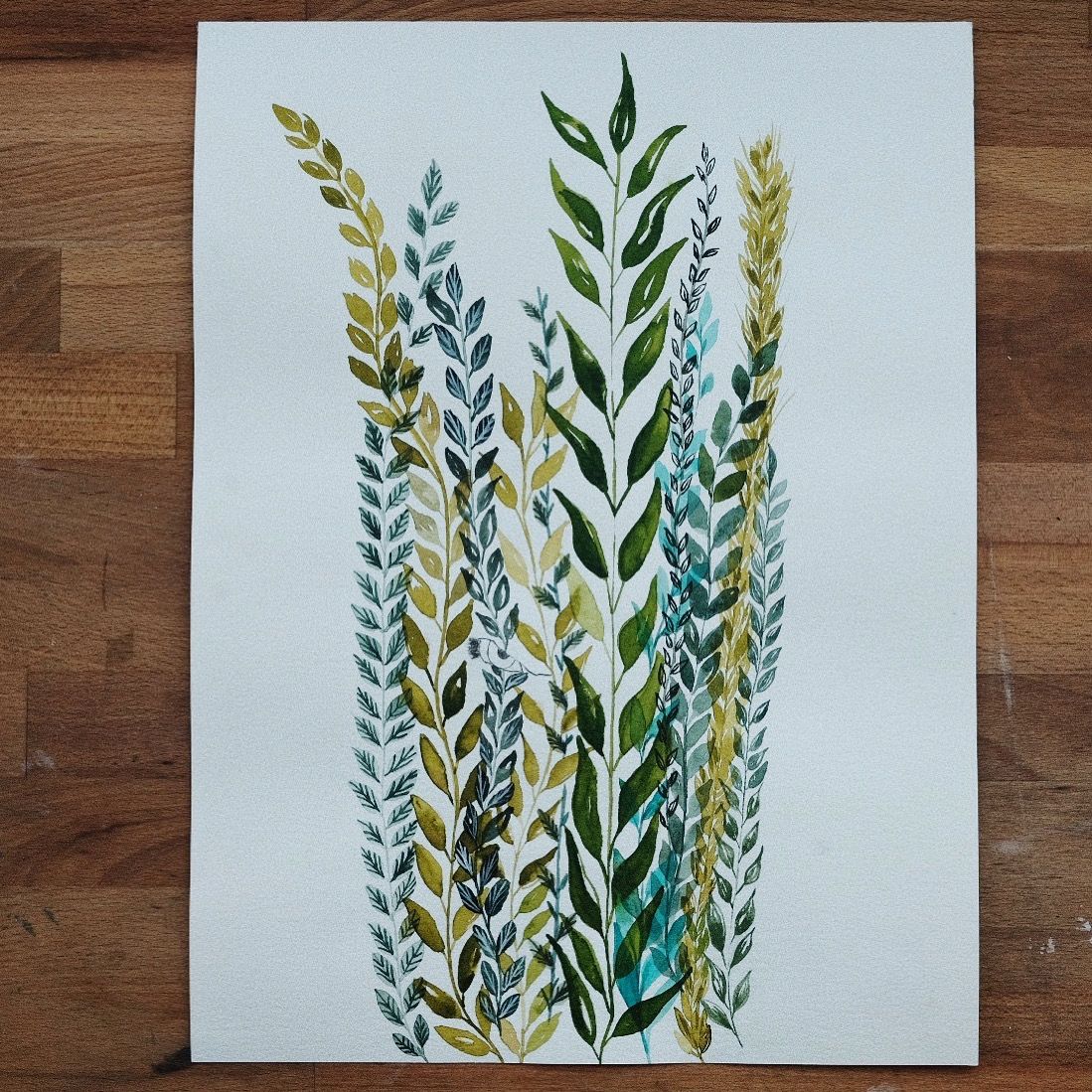
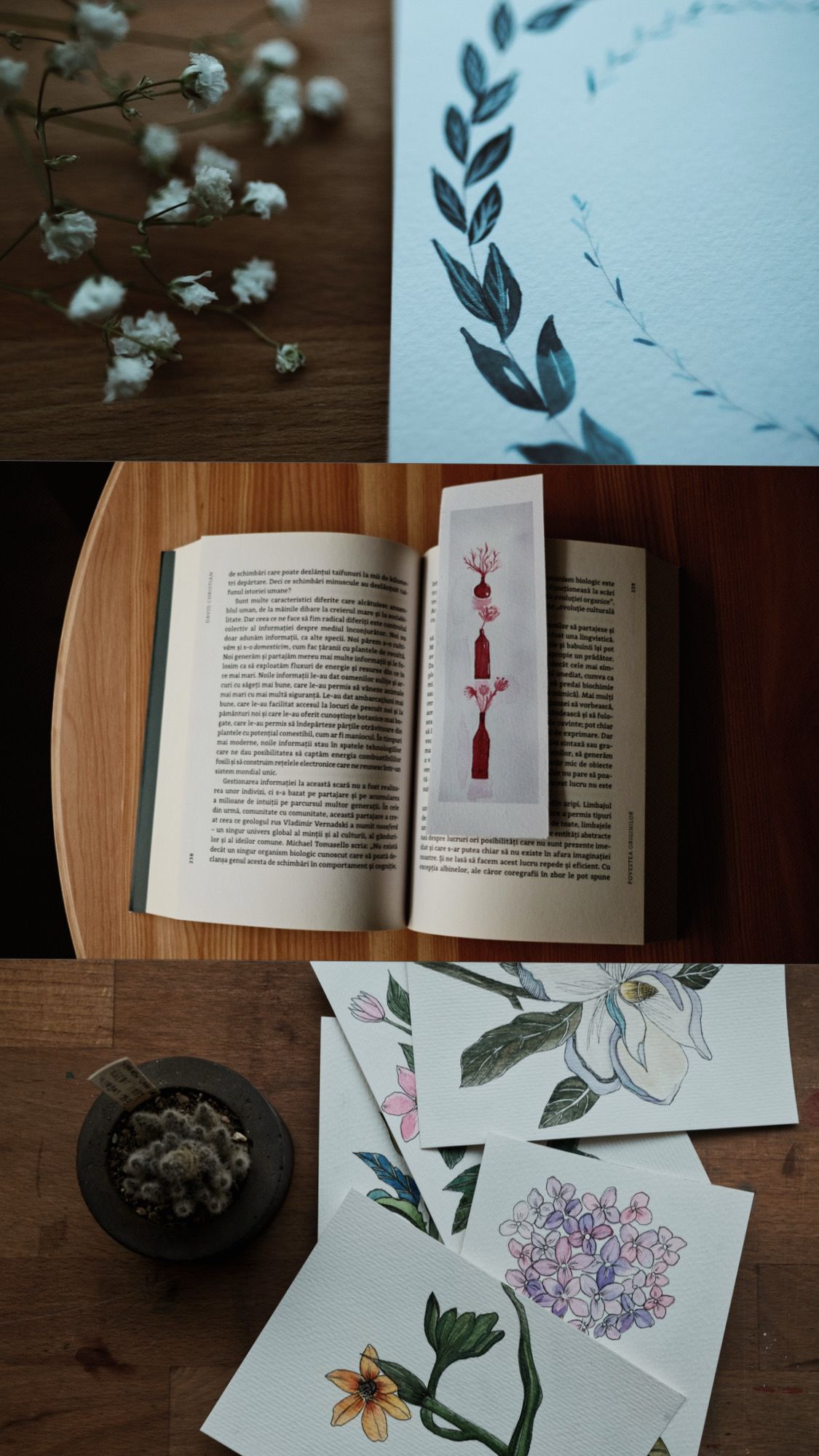
Her watercolour paintings: misty forests in earthy tones, bright green foliage, intricate line art of flowers; are befitting to her name – Flori – flower.
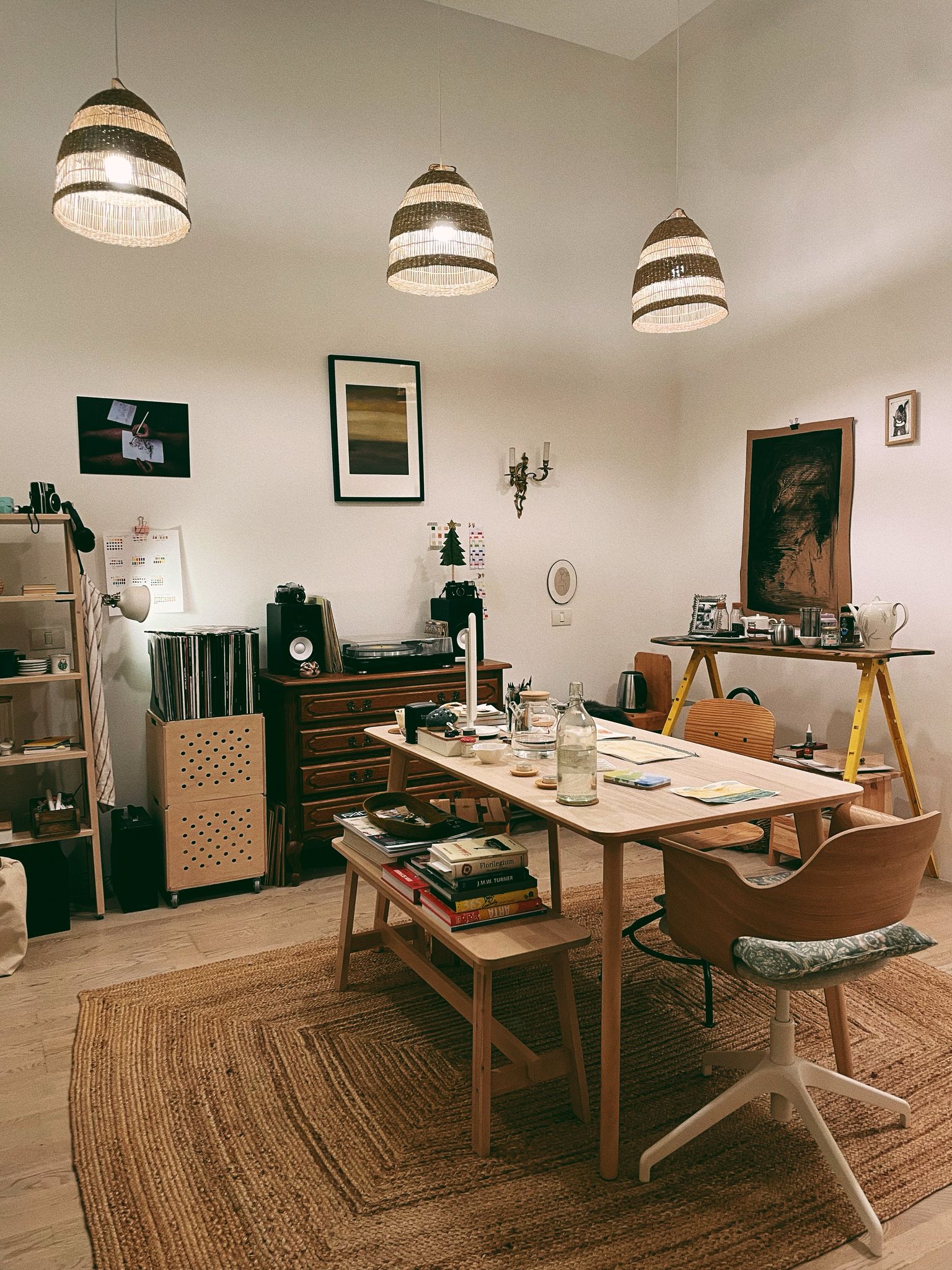
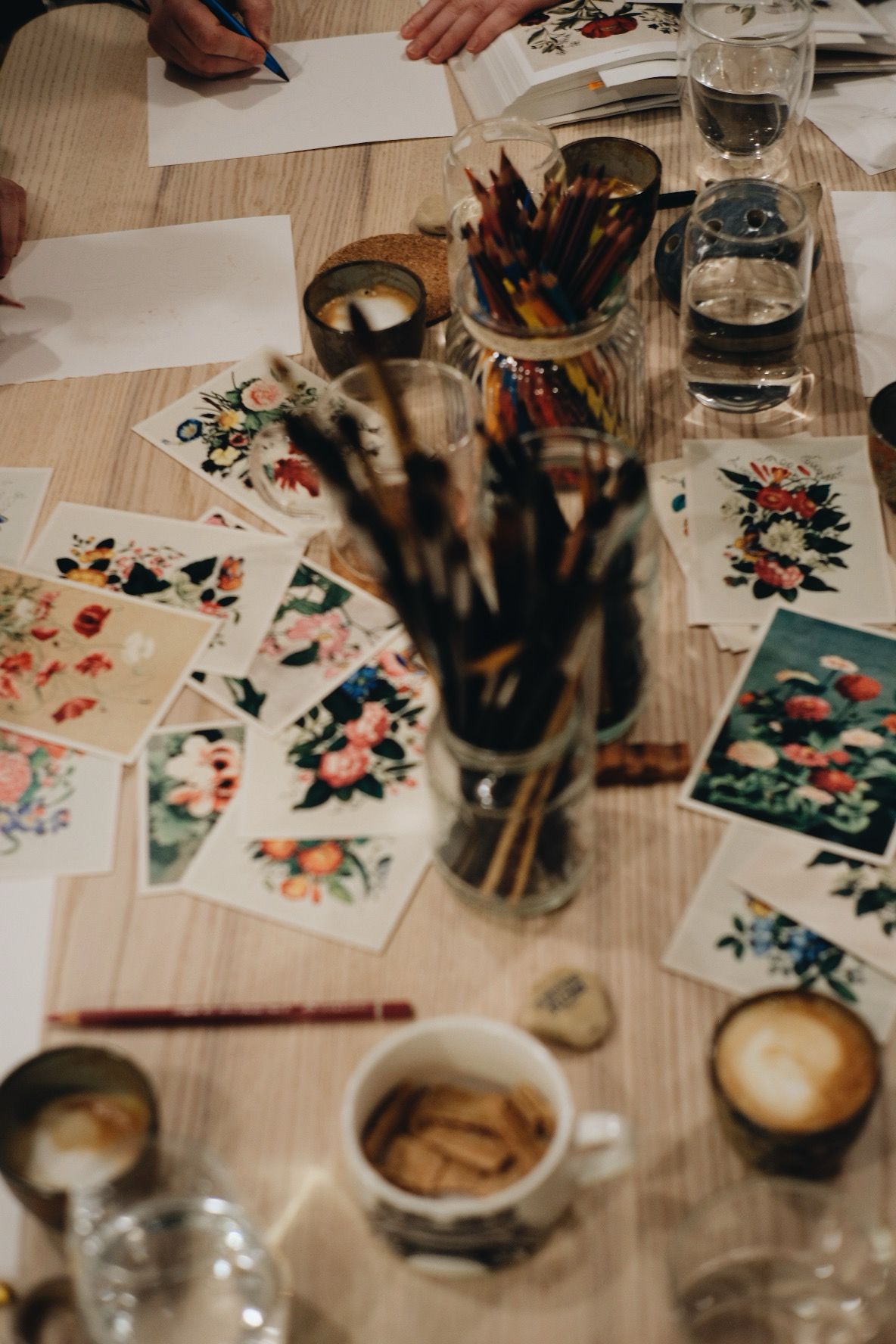
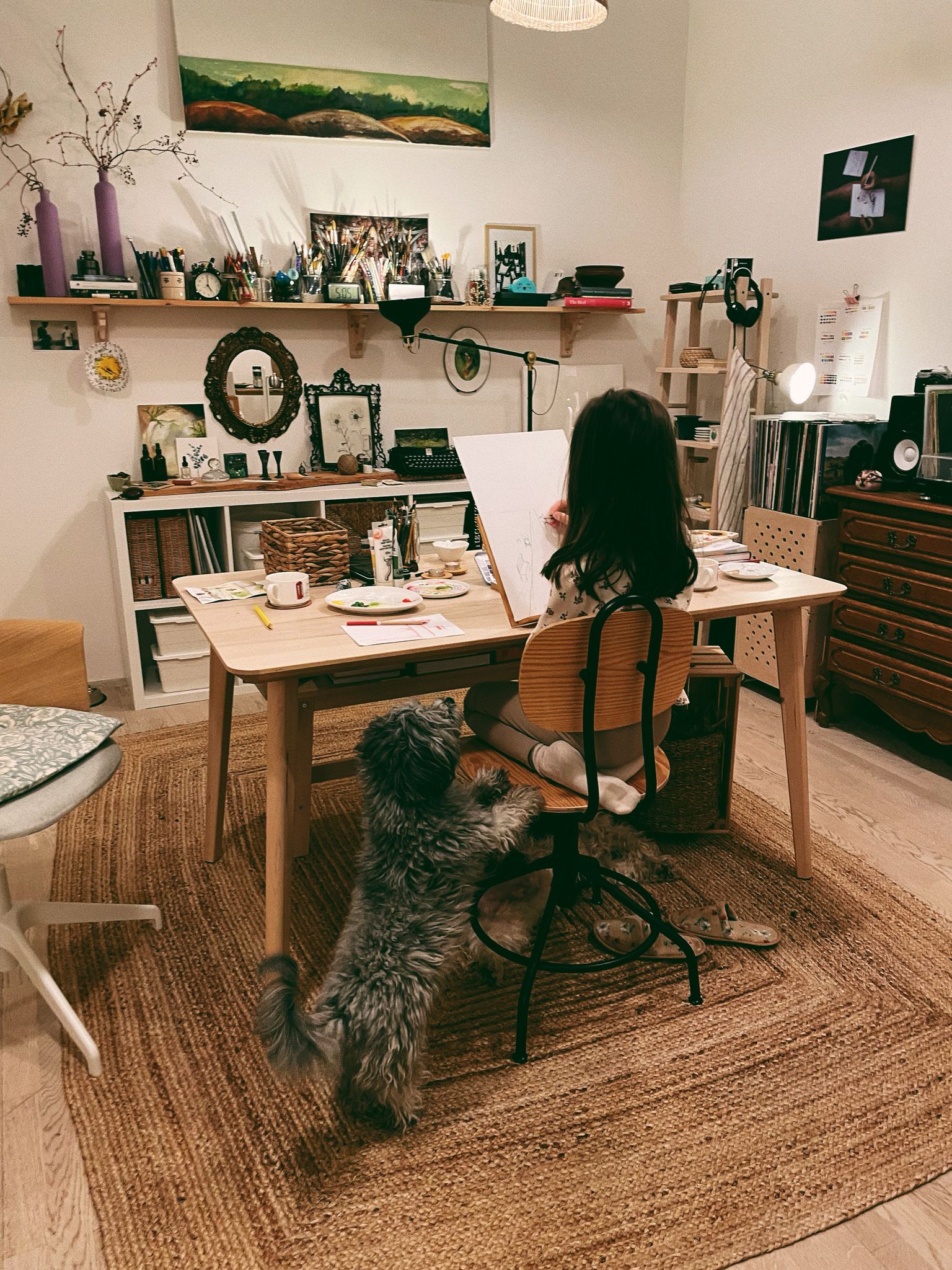
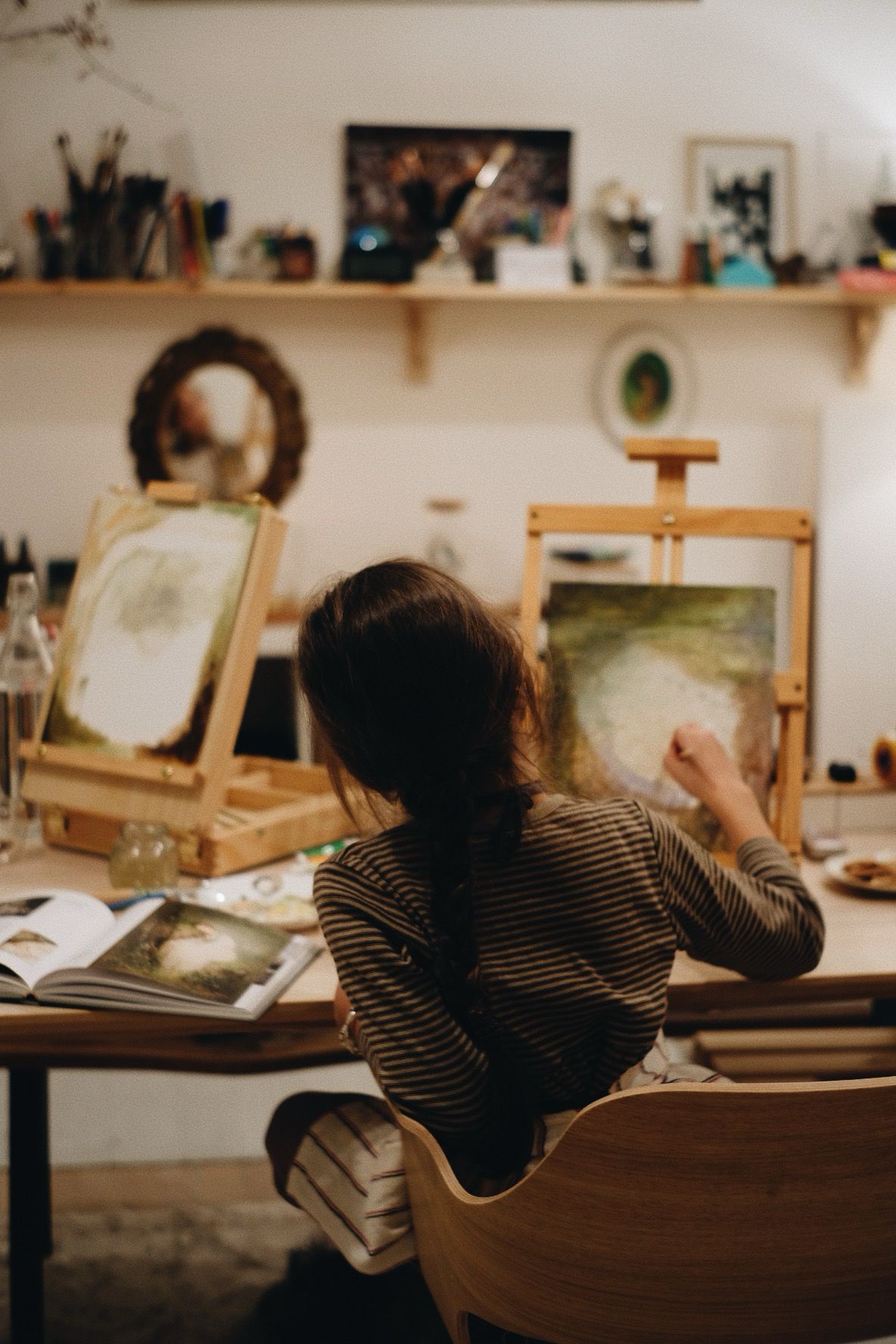
Her art studio, Atelier Achim, hosts not only her art. As an art teacher she tutors private sessions with students. Recently she created an intimate women’s day watercolour workshop.
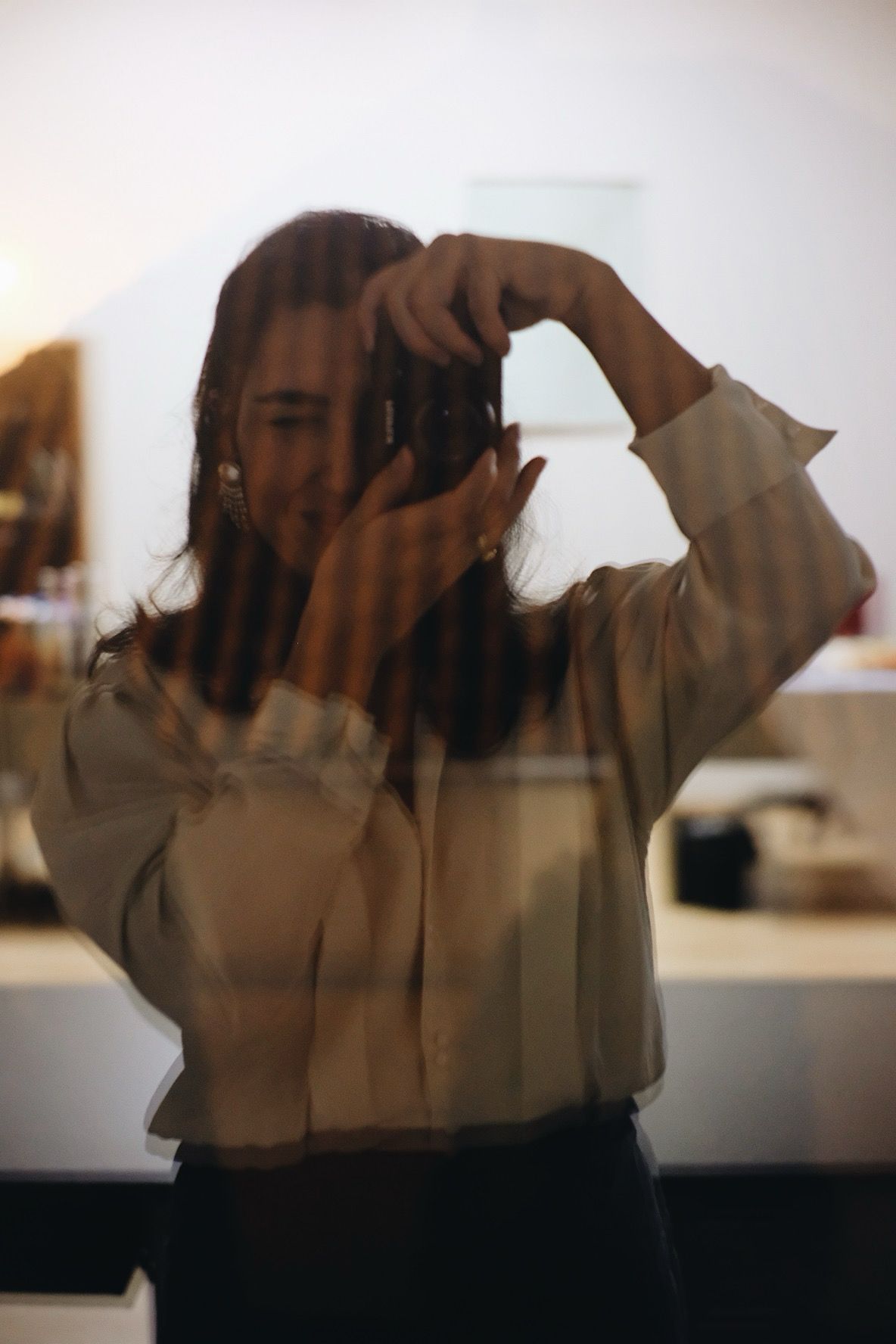
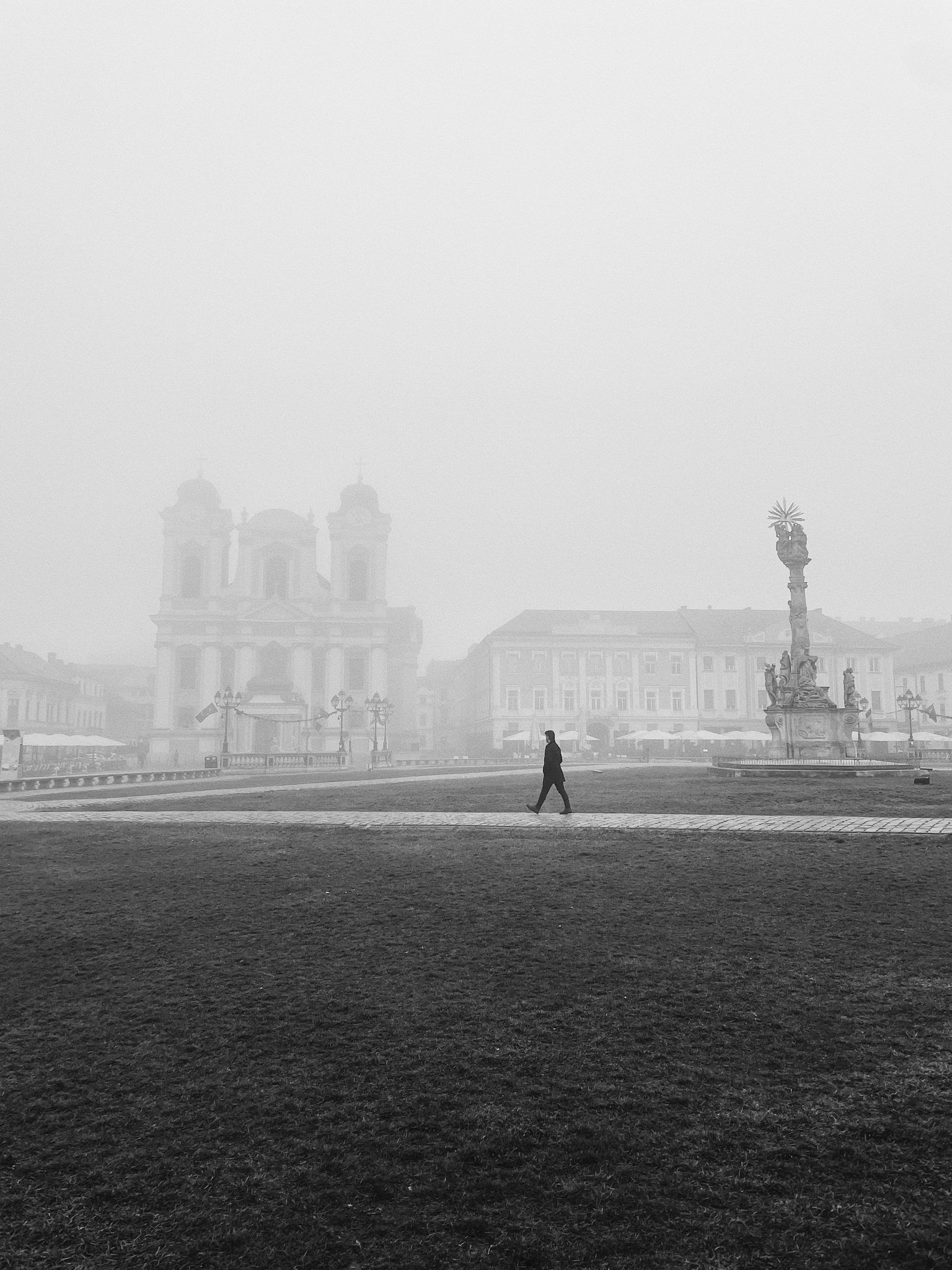
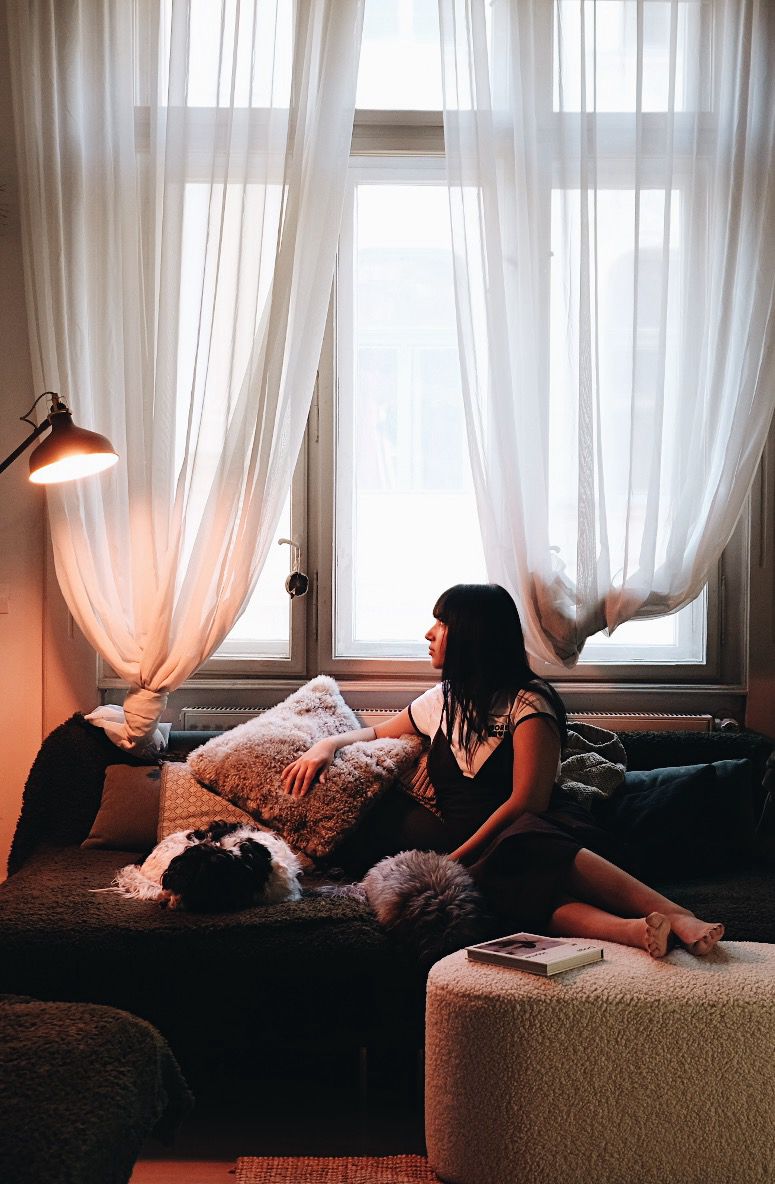
Her photography is documentary. Close ups of nature (flowers, leaves). Scenes in the home: a steaming cup of coffee in the morning sun. Self portraits in vintage mirrors or shadows on parquet floors. To quote her instagram bio: nostalgic soul, and you can feel it. Flori’s photography takes you back to a slower time. An eternally present moment. A movie still.
Flori and I first met in the botanical garden. As some of you may know I have a golden havamalt, Daisy. Flori has two havamalts as well: Lupi and Nero. The two pups are Daisy’s best friends. I have never seen her as excited, happy, or playful with other dogs. Thus began a few intentional meetings or accidental run-ins in the city with the dogs. The more we got to know each other, I discovered a fellow artist!
I would like to thank Flori for sharing some of her thoughts and experiences going through life with art.
Below you can read a transcript of the interview, translated from Romanian to English.
M: What brought you to art? Can you share a moment or experience that pushed you towards this?
F: I went to an art high school but I don’t remember doing watercolor there. From what I can remember it wasn’t one of our focuses. I would say thanks to my husband I started coming back to art. He has always encouraged me to pursue my art. In high school I painted for many years with different techniques but now I focus only on watercolour.
M: Can you tell us about the process of sourcing natural pigments and materials?
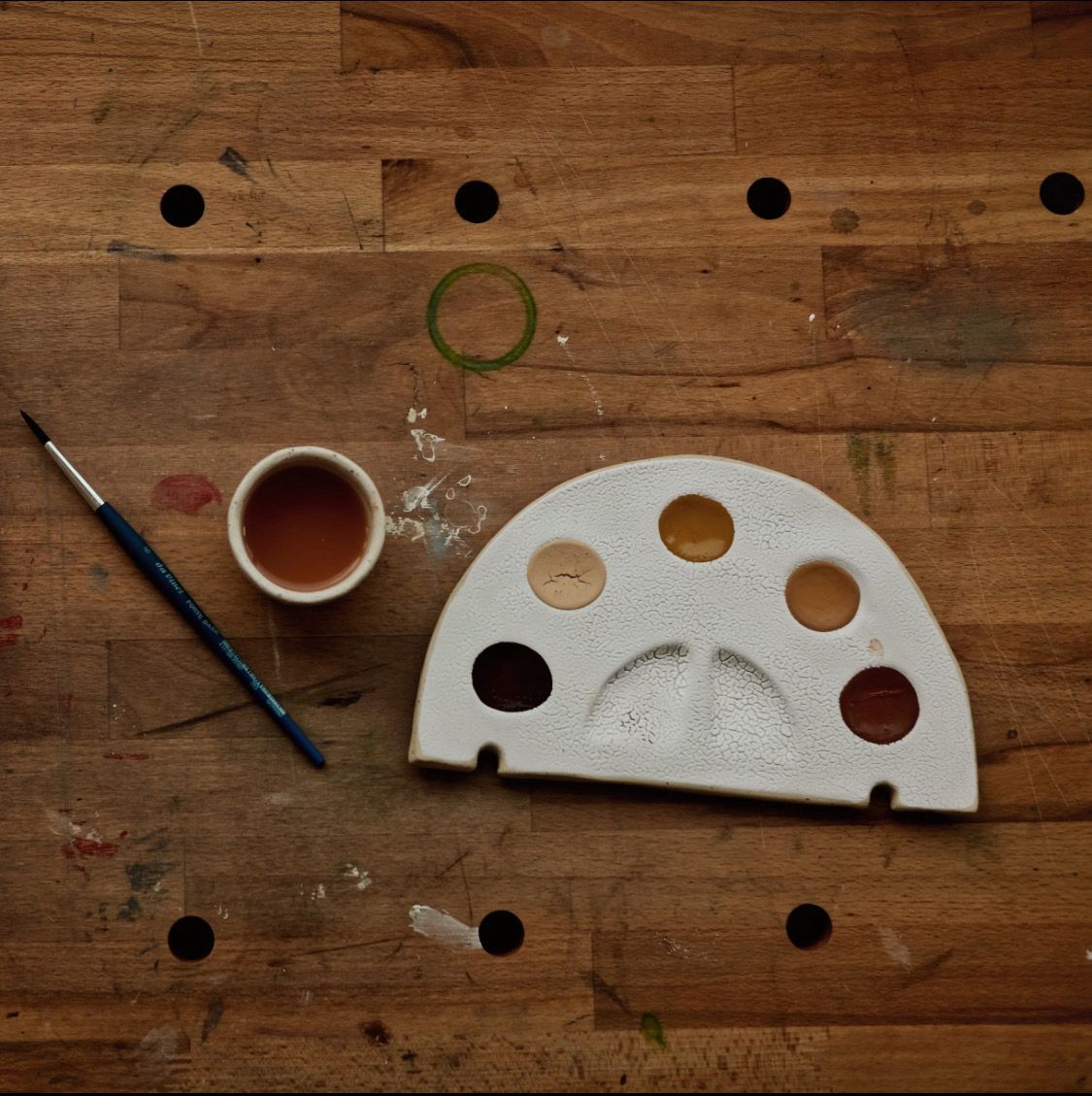
F: I start with oxides, which are used for mixing paints. It comes in a powder form. If you mean even more natural, I use clay. You can buy it online, the same kind they use to make face masks. Or you can find it outside in certain areas.
M: How do the unique qualities of natural pigments influence the way you make art?
F: I don’t think it affects my work or technique – physically. I think it brings a nicer state of being. Maybe you’re paying more attention to the whole process. The paper. The way the water flows across it. Your paintbrushes. Or just any of the tools you are using.
I can’t say that this is how everyone will feel when painting with watercolors or natural pigments. I can tell you this is how it makes me feel. It makes me feel good. I feel as though [with watercolors] I have arrived to a place where I feel comfortable and sure of myself in what I am creating. It’s as if a circle has closed. It’s very close to me.
The change is felt more by others because it’s something new. When you present this technique to them, they haven’t thought before that they could paint with coffee, tea, or a radish infusion, or clay from your own garden. You can do really cool things.
M: Are there any particular themes or subjects you think watercolor and natural pigments help you express better? I see that your subject is often natural….landscapes….plants…
F: Not necessarily. This is a theme I have always liked. Even when I was in high school painting in acrylic or oil, I still spun around in this area. Now it seems to me that watercolor helps very much with expressing this theme: plants, landscapes, everything that is natural.
M: Do you have a natural pigment that you prefer? Or a favorite color? And why does it resonate with you?
F: I can’t really say because with pigments it’s always surprising. I can’t say that I have a favorite color when it comes to pigments. They are always surprising. For example, when you see a pigment as green and then you put it on the paper and it’s not really green, or it’s not the green you thought it was going to be.
My favorite color in general though is green. And brown, orange. This area of natural colors or colors that you can find in nature. But again, not just from now. These have always been my favorite colors. Since I was little I was always with browns and oranges.
M: What inspired you to start offering workshops? What do your participants go home with?
F: I have always believed, since I was young, that before I am an artist, I am a teacher. I don’t really even like being called an artist. I feel more that I am a pedagog. Someone who can bring people together and offer them a state of relaxation further than anything. I think this is what they can take home with them. A state of relaxation. A state of trust where you can speak about anything and you can also create something.
First of all it’s cool that I can show them a relatively simple, creative option to relax and detach a little bit from life, which can sometimes be hard, or stressful.
M: Have you noticed any particular challenges or joys in teaching people to work with natural pigments?
F: I can’t say it has anything to do with the material. Challenges are relatively small because the groups are small.
People are very open. They are trying “new” things. Which are really just returning back to simpler things.
M: How do you balance your personal creative practice with your role as a teacher?
F: There isn’t really a balance. To be honest I focus more on pedagogy. Especially recently. Here I am only talking about painting. When it comes to photography, I do more.
But I would like to reach a balance in the near future. I feel as though it’s finally the moment where I have something to say with my paintings.
M: What is the most rewarding part of sharing your knowledge and passion for this art form?
F: The fact that I’m starting to realize that I am able to bring together a group of people who are there to pay attention to something that is important to me. I find this fascinating.
And the fact that theres a state of being that is formed by the group. Each time it’s interesting and it’s something new.
M: How do you think art, especially using natural materials can foster a deeper sense of mindfulness in the world?
F: Firstly it helps that it’s accessible. I think it takes away a little bit from this whole “art needs to be pretentious and expensive”.
On the other hand I do believe in using good materials. A nice paper. A good paint brush. I don’t think you need to have a lot but if at least your paper is good, and two good paintbrushes it’s enough. The cost is also reduced because the materials are often found in the house. To be creative you don’t need many things and you don’t have to be an artist to be able to disconnect and get joy from art. There’s no rules. Just common sense.
M: How has your artistic journey evolved since you’ve been working with watercolours and natural pigments?
F: At the start, I started as any beginner, to be honest as if I have never painted before. It’s very interesting to me that it was like a true new beginning. It was clearly a process of getting over the fear. Starting to teach myself from the beginning. To not be afraid of the blank page – it’s still a process! There are days where I feel super confident…there’s specific subjects and themes that no matter what I feel comfortable approaching them, this is from the seven years of practice and experimenting.
On the other hand it’s a really emotional process. What I mean by this is if I’m [emotionally] feeling good and I sit down in my studio at my desk in front of the paper, I feel that I can create something. If I don’t feel good and I want to be creative, to relax, the process is much harder. I have to feel good, at least relaxed if not happy. To not be rushed. It’s very important to feel that I have time. I need at least two-three hours where I know no one will bother me. Which I haven’t been able to do lately, I am needed – by the kids, the dogs…but at the same time maybe I should be more strict about my “art time” and prioritising it.
It’s difficult for me to prioritise this creative time because I’ve always wanted a family – and now I have it. I don’t feel bad about the order in which I prioritise my activities. I don’t believe your passions need to be placed above your family. Maybe I’m able to say this because I have a husband who supports me and my passions. Maybe if I also had to work a full time job I wouldn’t have the time and space to take care of our family as well as my artistic passions.
M: What have you learned about yourself in the process of teaching?
F: First of all that I can. Secondly, that my intuition has proved itself true: I am a pedagog before I am an artist. I think it suits me better to be behind the process while in the front. Not to be this “big artist” but to speak about art and connect people with it. It could have been anything – not just art – it could have been gardening, cooking. I love cooking! It could be anything, I think you need to find your thing and hold on to it. Doesn’t matter if it’s art, cooking, dancing, Anything. For me it just turned out to be art – I didn’t choose this. It was a gift and I was paying attention enough to see it.
M: Where do you see both your art and your workshops headed in the next few years?
F: Clearly in a school. Not a traditional school but a bigger art studio. Somewhere where more people can have access and we can gather in larger numbers. Not too big though! So yeah, the dream would be a bigger space, for a larger group. I know it will happen, not now but it’s coming!
My next dream would be that by the time I’m forty [years old] to write a book. I would love to illustrate children’s books and create photo albums.
M: If you could share one piece of advice with aspiring artists or workshop attendees – what would it be?
F: I can tell you what I’ve done, what has worked for me. Dream big. Dream the impossible. Ten, fifteen years ago I was dreaming the impossible… and now I’m living it! I really believe in this. Every day do something for your dream. Even if it’s just five minutes a day. Even if it’s just thinking about your dream. Don’t think about the barriers like “you don’t have money” or “no one supports me”. In ten years it will happen. I don’t know how, but it will happen. This is the most important. There’s no such thing as too much. It’s too much for your life? No. It will happen one day – everything in due time. That’s it.
 MARIA MICHAELA

Leave a comment